
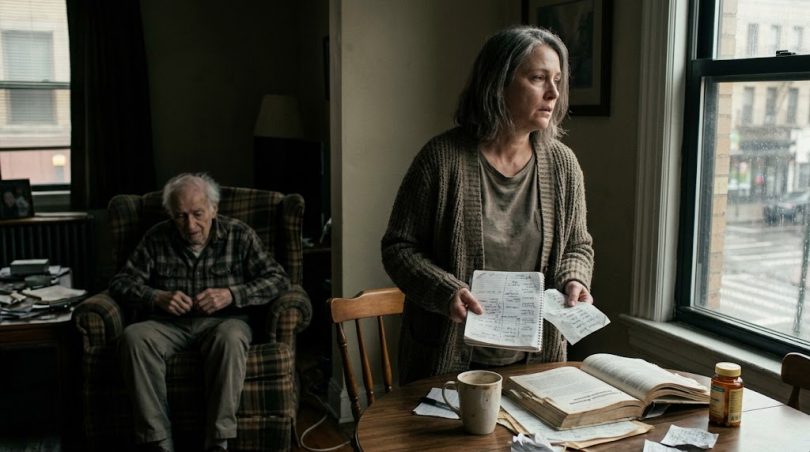

What is caregiver burden in the sandwich generation?
Carrying your aging parent’s handwritten shopping list in your pocket for weeks while rushing to feed the cat and clean its litter box is enough to make that parent feel less valued than the family pet. Lost privacy and personal freedom are undeniably profound sacrifices. But should the love a parent deserves ever be reduced to a calendar reminder?
Core Takeaways
- Beyond Material Care: Caregiver burden is far more than simply setting an extra plate at the dinner table; it is an existential tightrope between building the future for your children and preserving the fading past of your parents.
- The Illusion of Systemic Absolution: Framing caregiver exhaustion merely as an “irrational byproduct of modern society” risks stripping elderly parents of their dignity and absolving personal devotion.
- Cultural Preservations of Dignity: In Eastern-Anatolian traditions, less than one percent of seniors reside in care facilities; parents retain an unquestioned moral center within the household, proving that belonging is built on cultural reverence rather than spatial convenience.
- Belonging Over Duty: True relief from burnout arrives not from systemic shifts, but from a subtle alignment of perspective—granting a parent the same unconditional belonging and rights granted to every other living creature in the home.
The Unspoken Weight of the Sandwich Generation
Caregiver burden is a reality so intimate that only those actively living within its walls can fully comprehend its depth. Empathizing with the struggles of the sandwich generation from the outside is one thing; enduring it daily is entirely another.
This is not merely about setting an extra plate at the dinner table or remembering one more birthday gift. It is the agonizing effort of constructing the future for those you are bound to raise while simultaneously guarding the fading past of those who raised you. It is the quiet anxiety of fulfilling the duty of being a “child.” And when a chronic illness enters the frame, these anxieties inevitably solidify into an immense, overwhelming weight.
I call this “the share allotted by the modern system” because in times past—when the demands of population and daily life were far less suffocating—no one built a separate hut next door for an aging parent. Families simply lived together, finding a rhythm within the shared space. In extended families backed by organic community solidarity, this responsibility distributed itself naturally. There was neither a “sandwich generation” nor a formal label for “caregiver burden.”
To be crushed under such caregiving is a genuinely painful plight. No one has the moral standing to harshly judge those forced to bear this weight. Have you ever had to swallow the heart-wrenching grief of being unable to express your love for a parent—who sacrificed everything for you—simply because of sheer impossibility? I have not. And I pray to God that neither you nor I ever have to experience that sorrow.
My late father feared dependency above all else. Even in the final stages of cancer, whenever we visited his home, he would strain every fiber of his body to sit up unassisted, refusing help even from my mother. My mother, while still healthy, harbored a prayer of her own: “Two days in bed, on the third, the soil.” Her prayer was answered. After spending less than a week in the hospital, her doctor advised that her remaining days should be spent surrounded by family rather than cold medical equipment. She returned home and passed away on the third or fourth day.
Yet, I closely know people in my immediate circle who are deeply crushed by caregiver burden. In quiet moments of confidence, I hear stories so painful they feel almost too sacred—or too heartbreaking—to speak aloud. My heart aches for both the adult children and their aging parents. I suspect every family carrying this weight holds similar unspoken wounds, buried deep beneath daily survival.
However, even though we attempt to soften or legitimize this anguish by claiming that an adult child’s anger or burnout is “not a moral failing, but an irrational burden forced upon the individual by the modern system,” I believe this framework ultimately risks demeaning both our parents and our collective humanity.
If you carry an aging parent’s modest list of needs in your pocket for a week without action, yet jump into your car the moment your child asks for something, it is only natural for that parent to feel less valued than their grandchild. Or if you constantly inquire about the cat’s food and litter while rarely asking your parent if they need anything, they will inevitably sense that they carry less worth in that home than the family pet. In those moments, you cannot look them in the eye and say, “Father, this is simply the irrational result of the modern system’s burden on me.” They see it all. They weigh it all. What you forget, they remember. An aging parent—regardless of their frailty—retains their fundamental rights within the household, at least as much as a grandchild or a pet.
When a condition demands continuous medical care, I see no dishonor in seeking refuge in professional care facilities. If there is no one at home capable of safely administering medication, managing injections, or monitoring treatment, relying on specialized institutions is often the most humane and healthy choice. In fact, certain medical conditions require expert oversight regardless of a family’s financial standing. Yet, even when professional care is necessary, making parents feel that they remain an irreplaceable part of the family remains the sacred duty of a child. It is difficult—sometimes excruciatingly so—but if sacrifice is not made now, when will it ever be made?
Additional Section: The Eastern-Islamic Cultural Lens
In the Eastern-Islamic culture I belong to, this reality unfolds quite differently than in the West. I wish to elaborate on this because I believe viewing the matter through a different cultural lens offers a helpful step toward a resolution.
Intriguingly—and, in my view, beautifully—placing aging parents in a nursing home is rarely ever brought up. It is seldom even implied. Yet, an aging parent is not simply left to fade into a quiet corner of the living room either; they possess every right accorded to any other member of the household. And no, I am not exaggerating—in fact, they often hold more rights than anyone else. This remains true whether living under the same roof or in separate homes; when residing together, everyone simply exercises greater care and reverence. During religious holidays, family members living elsewhere gather at the home where the elder resides, paying their respects and kissing their hands. I have observed a consistent pattern: whichever home shelters the parent seems to overflow with a quiet abundance and genuine peace—a happiness that feels deeply real, not manufactured.
For instance, if the daughter-in-law decides to change the living room curtains, she inevitably seeks the elder’s opinion, whether the parent fully grasps the design choices or not. In essence, whether parents live in their own home or yours makes no difference to their standing.
Does this restrict the couple’s privacy and freedom? Undeniably, it does. Yet such grievances are aired outside the home, never shown within. If frustration boils over publicly—say, from a daughter-in-law—she often faces a harsher reprimand from her own mother than anyone else. I am not suggesting everyone lives in unblemished bliss; rather, that is the dignity they choose to project. There is a deeply rooted unwritten understanding: if a woman enters a marriage knowing her spouse’s parent will share their home, she surrenders the right to complain or express resentment. Remarkably, I frequently observe this pre-agreed arrangement even among younger generations. When asked, their response is almost always the same: “What else are we supposed to do—throw them out on the street?”
If an aging parent’s condition worsens to the point where home care is no longer viable and professional medical intervention becomes mandatory, they are still never left alone. The family establishes a strict rotation of duties; adult children take turns staying by the bedside, sometimes for whole days or nights, attending personally to the most intimate care needs, such as changing adult diapers, regardless of how many years the illness persists. And during holidays, the entire extended family redirects its gatherings to the care facility. This protective instinct is so intense that local evening news occasionally reports incidents of relatives clashing with medical staff over perceived neglect—and everyone intuitively understands the fierce love behind that outrage.
Is everyone like this? Certainly not. Tragic stories of forgotten elders exist here as well. Based on my observations, these instances occur somewhat more frequently in the higher-income districts of my city—though still exceptionally rare compared to global generalities. They typically involve families who travel abroad frequently or those shaped by prior divorces. In my research, the rate of adults aged 65 and older admitted to public or private nursing homes in my country barely reaches one percent. They largely comprise the demographics I just described.
Even more fascinating is the reaction from the younger, highly modernized generation—such as my daughter’s peers. When I ask for their thoughts, their responses are surprisingly sharp: “What are you talking about, Uncle? Who throws their own parents into a nursing home?” The phrase “throwing them away” remains the primary cultural translation for nursing home placement. Some even declare, “If my spouse isn’t willing to look after my parents, they shouldn’t marry me in the first place.” I find myself smiling at these reactions, though I admit to a slight mix of feelings. Despite rapid modernization, Anatolian cultural values remain so deeply anchored that this mindset promises to endure for years to come.
Forgive me if I have lingered too long on this point. But the thought of a parent—who sacrificed an entire lifetime for their children—being cast aside deeply wounds my heart, whether it happens here or in the West. In closing, I will not preach about how precious parents are or lecture on filial responsibility; anyone with a functioning conscience already knows this. Instead, I suggest that the resolution begins with a quiet realignment of how we view our homes.
If our children, our pets, and even the potted plants on the windowsill are embraced as organic parts of the home—their needs fulfilled willingly as their natural right—does a quiet mother or father sitting in the corner, trying hard not to be in the way, not deserve that exact same gaze? Does a frail parent, who costs less than a pet, truly constitute the real “burden”?
Undoubtedly, younger couples pay a heavy price in lost privacy and restricted freedom. That is an undeniable truth. But is that price not worth paying? If not now, when is this earthly test to be passed? Amid every hardship, I believe no blessing or prayer on earth holds greater weight than the one received from a parent. Gaining their contentment is akin to gaining Divine grace—a key to peace in both this life and the next. To hold that key securely, consider waking up tomorrow and viewing that aging parent not as a temporary guest with an uncertain future, but as a core anchor of the home, possessing at least the same belonging you grant to the life around you. From that moment on, even with two children, when asked, you will naturally refuse to say you are merely a “family of four.”
Change the lens you wear, and the world inside the home rights itself.
“The service you offer to your parents is an offering presented to God. Ministering to their needs is the very healing of your own soul.”
— St. John Chrysostom