
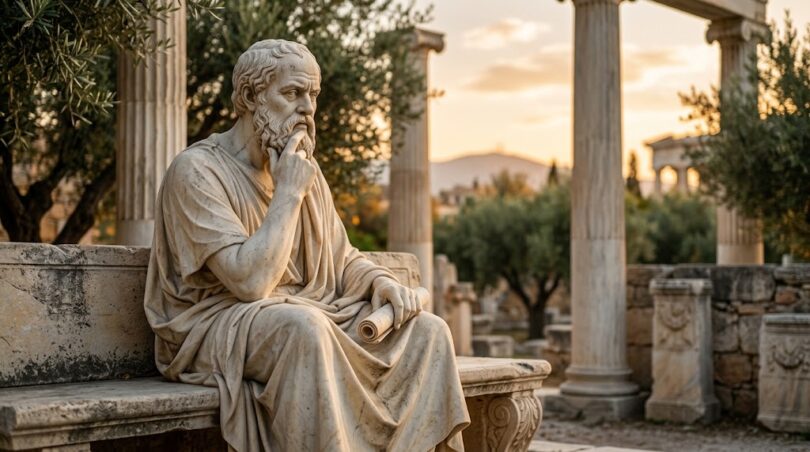

Yes, true knowledge comes from logic, not from the senses. I believe Plato was right. But why? If you notice, Plato used the phrase “true knowledge,” not simply “knowledge.” We are not talking about bare knowledge existing on its own, but a knowledge to which the attribute of “reality” or “truth” is later attached. Senses cannot attribute meaning; they merely experience.
Giving names to what is experienced is the work of logic and ideas—the products of the mind. While the senses absorb the content of actions or phenomena, logic names what transpires. After many possibilities and trials, it finally earns the title of “true.” Even though truth is a relative concept, this judgment is rendered because it is the most beneficial to the individual. Otherwise, had things been left to emotion, humanity would hardly have made it to the present day.
When something delicious yet harmful is desired by the senses, logic prevents it from being acted upon. If it fails to prevent it, then it is a case of the senses defeating logic. Yet this does not alter the fact that true knowledge stems from logic. When the ego steps in and sets logic aside, it is not the fault of logic, but a choice. While the senses continue to take pleasure, logic continues to object by its very nature.
This means a thing is tried by the demand of the senses, but labeled as “harmful” by the decision of logic. In other words, it is tested through the sense, but judged through logic. That is why it is logic, not sense, that bestows the name upon true knowledge. Is that not why our heads sit at the very top of our bodies anyway?
What is expected from black clouds carrying rain is not water, but fruit. While logic defines the necessity of water for fruit as a truth, the senses savor both the rain and the fruit. But does sense have no influence whatsoever when judging whether a piece of knowledge is true or not?
A person defines knowledge as true knowledge in two situations: where they can make a comparison, or where they cannot. If logic can make a comparison, it follows its own path; when it cannot, it asks for the opinion of the senses.
The only place where the senses hold sway without logic is after one surrenders the self, stepping across the threshold of the Divine door at the ultimate destination. Logic, which was necessary up to this point, becomes unnecessary beyond it. Logic is now like a coat left at the cloakroom upon entering a venue. It can no longer define what transpires; from here on, it is the domain of the senses, and this is why the senses exist.
If someone were to ask a drop falling into the ocean who it is, it would reply, “I am the ocean.” That is love… What business does logic have in love? They once said to Majnun: “This Leyla of yours is not even that beautiful, why are you in such a state?” He replied: “Ah, if only you could see her through my eyes!”
This is how I view the relationship between logic and true knowledge. I did not intend to bring the topic to faith, but it inevitably arrived here. Perhaps because I believe everything other than the Creator has an end, I simply wished to look at Plato’s thesis from this perspective. I would be very glad to hear the valuable thoughts of my friends who share or differ from this view.